

Your First Tattoo
Your First Tattoo: It’s Not About Courage. It’s About Trust.
The first tattoo is rarely about ink. More often, it’s about the moment you finally decide to trust yourself.
There’s a strange quiet that settles in before a first tattoo — and it doesn’t happen in the studio, or when the machine starts up. It happens long before that, sometimes weeks earlier, sometimes years. Someone spots a small tattoo on a stranger in a coffee shop and can’t stop thinking about it for days. Someone has hundreds of images saved on Pinterest but has never booked an appointment. Someone keeps walking past the same tattoo studio, slowing down for a second each time before continuing on.
These people aren’t afraid of the needle, and they’re usually not even afraid of the pain. What they’re really asking themselves is something closer to: Am I actually the kind of person who gets a tattoo? And that question has surprisingly little to do with tattoos. It’s about identity — about permission, really — about whether you’re ready to let something visible reflect what’s been sitting quietly inside you.
The Myth of Being “Ready”
A lot of people assume there’s some magical day when they’ll simply become ready — as though confidence just shows up one morning and you wake up knowing exactly what you want, where it should go, and who should make it. That’s almost never how it works.
The truth is quieter than that. You don’t become ready because every doubt has been resolved. You become ready when the meaning starts to outweigh the uncertainty. You might still have questions. You might still feel nervous, or change your mind about the size or the placement a dozen times. Readiness was never about perfect certainty — it’s the point where you’re finally willing to explore the idea honestly instead of dismissing it out of fear of getting it wrong. That shift changes everything.
Why People Sit With the Idea for So Long
A first tattoo usually starts as an idea, but rarely a complete one. Maybe it’s a name, a place, a photograph, a line from a letter, a memory that keeps resurfacing. Sometimes it represents a person. Sometimes it marks the end of something hard, or the start of something new. And sometimes there’s no dramatic story behind it at all — it’s simply something the person has wanted for years, plain and simple.
Sometimes it’s not even about the past. It’s about recognizing who you’ve become.
This is part of why people approach their first tattoo so differently depending on where they are in life. At eighteen it can feel like independence. At thirty-five, more like reclamation. At fifty, it might be the first time someone chooses something purely for themselves, without wondering whether anyone else will approve. The image itself might be small. The decision behind it usually isn’t.
A Decision You Can’t Fully Take Back
Laser technology can lighten or remove a lot of tattoos now. Artists can build cover-ups. Designs evolve. But none of that erases the emotional weight of the original decision. Unlike new furniture or a haircut or a freshly painted room, a tattoo becomes part of how you move through the world — which is exactly why people hesitate. Not because they’re weak, but because they understand that permanence deserves some respect.
Ironically, the people who spend the longest deliberating before their first tattoo often end up the happiest with it. They don’t rush. They ask questions. They pay attention to how they feel sitting across from an artist during the consultation. The goal was never to eliminate every possible doubt — it’s to make a thoughtful decision with enough time, enough information, and the right person next to you.
The Fear Isn’t Really About the Tattoo
Ask someone what scares them about their first tattoo and most will say some version of “what if I regret it.” But keep asking, and something deeper tends to surface. What if I picked the wrong design? What if it looks nothing like I imagined once it’s on my body? What if people judge me? What if my life changes — or worse, what if I change?
These aren’t really design questions. They’re life questions, and a first tattoo just happens to be where they surface. The fear of regret is often, underneath it, a fear of becoming visible — because a tattoo says that something matters enough to be expressed, and that can feel vulnerable even when the tattoo itself is completely private. Feeling both excited and uncertain at the same time doesn’t mean you should drop the idea. It might just mean you understand how much this actually matters.
You’re Not Buying Art — You’re Entering a Relationship
A lot of people treat choosing a tattoo artist like choosing a restaurant: check the reviews, compare prices, pick a time slot, book it. Tattoos don’t really work that way. For those few hours, someone is translating your thoughts into something permanent, and while technique, experience, and style all matter, listening might matter more than any of them.
The best artists don’t start by telling you what to get — they start by asking. Why this idea? Why now? Why this spot on your body? How do you want it to feel five years from now? What part of the reference photos are you actually drawn to, versus just using as a placeholder? Sometimes the conversation reveals something the client hadn’t fully worked out for themselves yet. That’s not therapy. That’s just good design.
Most Meaningful Tattoos Start as Unfinished Stories
Plenty of first-time clients apologize during a consultation — “I don’t really know what I want.” That’s not a problem. Most meaningful tattoos don’t arrive fully formed; they start as fragments. A memory, a feeling, a promise. A photograph. A flower that grew in someone’s childhood garden. A sentence they can’t forget. Someone’s handwriting. An image that feels familiar before they can even explain why.
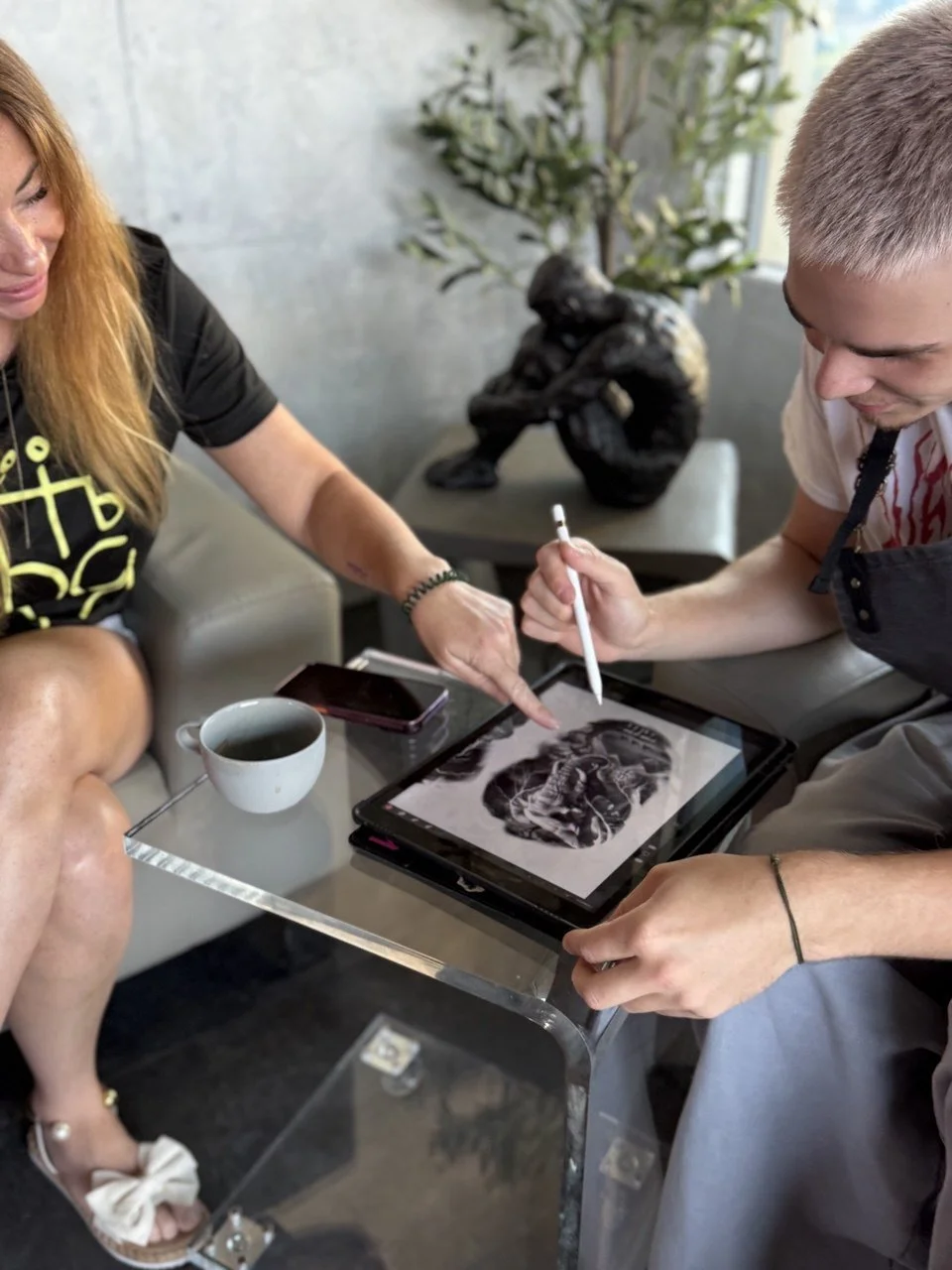
An artist’s job isn’t just to reproduce an image — it’s to figure out what those fragments are trying to become. That’s why picking an artist isn’t only about liking their style; it’s also about how well the two of you can actually talk to each other. You should feel comfortable saying “I like this part, not that part,” or “I need more time,” or “can you walk me through why you’re recommending this placement?” A good artist treats those questions as part of the work, not an inconvenience.
A first tattoo is a personal decision, and it's worth taking the time to feel confident about it. If you ever decide you're ready, we'll help you find the right design, size, and placement, and guide you through the entire process with care, so your first tattoo experience feels comfortable from start to finish. https://tattoo-point.com/form
